About us
On this page:
- Information about the name change
- Board members introduce themselves
- FFT staff introduce themselves
1. About the name of the Friendly and Fair Teaching Foundation
The foundation has changed its name. It is now called the Friendly and Fair Teaching Foundation. Previously, it was known as the Rapucation Foundation. This name change was formalised by a notary on 01 October 2025.
The current objective of the Friendly and Fair Teaching Foundation is set out in its articles of association. The overview below shows that not only the name, but also the target group and the methods used to achieve the objective have changed.
Rapucation Foundation
2007–2025
Tony Scott came up with the name Rapucation.
Objective
We aim for all pupils and teachers to feel happy and to develop within a stimulating educational environment.
Target group
Pupils and teachers
Method
School-based projects in which pupils wrote personal texts and shared them with each other. Each project concluded with a performance.

Friendly and Fair Teaching Foundation
(2025 – )
Nick Sorensen translated the current Dutch name ‘Stichting Vriendelijk Orde Houden’ into Friendly and Fair Teaching Foundation.
Objective
The foundation enable pupils, teachers and educators to develop their talents. FFT aims to create a friendly, fair, peaceful and inspiring classroom environment, with the hope that pupils will:
- use their full potential in society;
- interact with one another in a kind and respectful way;
- contribute to a healthy environment for future generations.
Target group
Teachers, educators and students
Method
Courses, team training sessions and a course book
Friendly and Fair Teaching has grown from ideas that extend beyond the classroom. It is connected to philosophies rooted in non-violence, community spirit and personal development.
Friendly and Fair Teaching began in Amsterdam as an initiative by secondary school teachers. They were searching for the conditions that enable pupils to develop their talents and to engage positively with one another and the world. These teachers believe that when pupils experience lessons as meaningful, order arises naturally.
Developing this approach has taken years of time and effort, during which the creators reflected on, analysed and rewrote their own practice. They supplemented their experiences with quotations from literature, professional sources and philosophy. This helped to identify core principles that are independent of individual teaching styles, circumstances or types of school.
Valuable contributions from students, teachers, course participants and experts can be found at the end of each topic under the heading ‘Credits’. Friendly and Fair Teaching regards all these ideas together as a ‘collective memory of teachers’.
Today, teachers apply elements of FFT in primary education, secondary education, vocational education and higher professional education.
2. Board Members

Wietske Tijssen – Chair – Primary School Teacher
After completing my degree in Sport, Management & Entrepreneurship, I organised projects on behalf of the Friendly and Fair Teaching Foundation. I was also involved in shaping the Friendly and Fair Teaching approach. During this process, I spoke with, observed and interviewed many teachers, pupils and educational experts.
This inspired me so much that, in 2018, I retrained as a primary school teacher and graduated from teacher training college. I now thoroughly enjoy teaching upper primary classes at a state primary school.
The experiences I gain in the classroom provide valuable input for the FFT programme, and the ongoing developments within FFT enable me to deliver innovative lessons in a safe environment. I hope to continue combining these elements for a long time, so that I can keep developing myself, my pupils and FFT.
You can also read my blog on this website about my contributions to Friendly and Fair Teaching. All my blog posts are collected under The Learning Teacher.
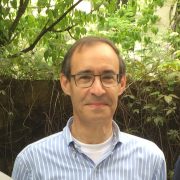
José Caballero – Secretary
For many years, I worked as a teacher of chemistry and physics, teaching at levels ranging from MAVO/VMBO-T and HAVO to VWO and Gymnasium. As a career changer, I trained at VU University Amsterdam, where I learned from the insight and experience of the two best teacher trainers I have encountered throughout my professional career. They provided starting teachers with a small number of highly effective tools to ensure that lessons run in an orderly way — the essential foundation for a successful learning process.
I recognise these same tools in the methodology of Friendly and Fair Teaching. In essence, there is nothing new here, but in daily practice they are sometimes overshadowed by a range of ‘new insights’ that unnecessarily complicate the theoretical landscape, making it difficult to see the wood for the trees. Keep it simple and effective.
As Secretary of FFT, I aim to continue contributing through the materials and activities we organise. I hope that by adopting these skills, colleagues will be able to carry out their vitally important work as teachers — regardless of subject — with confidence, calmness and enjoyment every day.
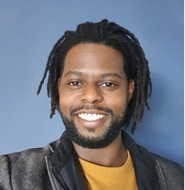
Raoul Vertrouwd – Treasurer
As Treasurer, I not only oversee the financial side of our organisation, but also safeguard its mission: Friendly and Fair Teaching. With a background in Business Administration from Vrije Universiteit Amsterdam and experience in various roles within the financial sector, I have developed a strong foundation in organisation and finance. I combine this expertise with my passion for education.
In my work as a teacher at the Comprehensive School Buitenveldert (CSB), I organise, through the Junior Business School and the subject Service & Products (New Learning Pathway), innovative educational concepts aimed at enriching the learning environment for a wide range of pupils. In addition, I have developed personalised learning pathways across various educational levels (secondary, vocational and higher education). I have also designed and delivered train-the-trainer programmes in collaboration with the university teacher training college. I firmly believe that high-quality education begins with well-trained professionals. Through my experience, I have regularly inspired others to pursue a career in education.
I believe that every child has the right to a good education, regardless of the challenges they may face. This is not just a vision, but a driving force in everything I do. As Treasurer, I ensure that our resources are used responsibly, so that we can continue to build an inclusive and strong educational environment together. What motivates me most is seeing growth — in both pupils and colleagues. Outside of work, I find relaxation in sport, travel and meditation, where I gain new ideas to further strengthen education.
This role as Treasurer gives me the opportunity to combine my organisational strengths with my passion for education.

Johan ’t Hart – General Board Member – Founder of the Foundation – Author – Coach
My childhood was characterised by a sense of optimism. Everything was expected to improve. There was democracy, economic growth and technological progress. NATO ensured our security, and the United Nations safeguarded peace in the world.
In 2007, I read in Moreel Esperanto by Paul Cliteur that fundamentalism was on the rise among Christians, Muslims and Jews. I began to feel that authoritarian tendencies and polarisation could resurface. My optimism started to waver. I realised how vulnerable our civilisation is.
I felt I could not simply let these developments run their course. My experience as a teacher – shaping a class into a close-knit community – is something I am keen to share with other teachers through Friendly and Fair Teaching. Their students can then experience how important it is to be part of a strong community. That experience may later encourage them to contribute to an optimistic, peaceful and democratic society.
Autonomy is important to me. At the school where I worked as a music teacher, I was given the freedom to shape a social environment together with others for 37 years. In that environment, autonomy for students was central. FFT consists partly of my own experiences and partly of the expertise of others.
My role is to develop and continuously improve the website so that its content becomes increasingly practical and applicable. I also provide the English version: Friendly and Fair Teaching. In addition, I deliver VOH courses.
Watch the video in which I talk about my parents (part of the First-ID projects carried out in schools in Amsterdam).
3. FFT staff introduce themselves

Nick Sorensen – Adviser to Friendly and Fair Teaching
Nick Sorensen is Emeritus Professor of Education at the School of Education Bath Spa University. Prior to joining Bath Spa in 2008 he had over 25 years experience of working in secondary schools, including 6 years as a headteacher. As a musician he has always been fascinated by the practice of improvisation and he realised that this knowledge could be applied to teaching. By helping teachers to understand improvisation as a mode of creative practice he has enabled them to develop their expertise. He has written extensively about improvisation based pedagogies and his book ‘The Improvising Teacher: Reconceptualising Pedagogy, Expertise and Professionalism‘ is published by Routledge.
Further information about Nick can be found on his website https://nicksorensen.org

Astrid Boon – Advice
Astrid Boon has been a pedagogical orthopedist and external confidential advisor at several secondary schools in Amsterdam and the surrounding area.
Astrid wrote the book ‘Penalty / Rules’. The insights from this book are reflected in the reflective writing assignment. Together with Leo Prick she also wrote the book Too cozy in the classroom. In this book Astrid Boon and Leo Prick make a plea for better cooperation between parents, teachers and school. The reason for writing this book was the increasing complaint of students that many classes are so cozy and disorderly that work cannot be done. Students therefore urge their teachers to set clear rules and then reinforce positive behaviour if necessary. Parents are accused by schools of being the cause of the order problems because they do not educate their children properly. For their part, parents complain that they are kept ignorant of the problems going on at their son or daughter’s school, such as teachers not functioning properly or classes not being taught sometimes for months at a time.
Friendly and Fair Teaching, like Astrid Boon, strives to improve collaboration between teachers, senior members of staff and parents and offers them opportunities to do so.

Wiepkje ‘t Hart – Editor
My name is Wiepkje ‘t Hart. Johan ‘t Hart is my brother. Johan and I were both working in highschool-education. I did that for thirty years. My subject was Dutch language.
The University of Groningen made an evidence base list of all you need as a new teacher to grow faster in educational skills. They send several coaches to schools to archieve that. For several years I was one of them. When I saw how difficult it was to so many teachers to create a positive learning environment in their classroom, Johan told me his ideas of friendly and fair teaching. I was very interested in his project.
We regularly discussed his ideas about FFT. From the very beginning, I helped him improve the website’s language.

Rense Houwing
Author – editor – designer
In all kinds of work I had built up experience in individual and group training, knowledge transfer, coaching and guidance, with generally positive reactions. Choosing to become a teacher seemed a natural progression, but although there was a focus on “keeping order” in the training, it turned out that in my final internship I was totally unprepared for the dynamics in such a group of thirty young people. That year ended in confusion and suppressed panic.
Some time later, I stumbled upon Friendly and Fair Teaching that was apparently effective and also appreciated by the students. Promptly the suppressed trauma surfaced. Soon I knew: I must do this! Here lies the crux of being a happy and effective teacher.
I am still intensely happy and grateful that Friendly and Fair Teaching came my way. I don’t see it as a “method,” but as a collection of compatible and highly effective ideas, practices and concerns, with the common ground and goal that students and teachers flourish in a friendly, honest and stimulating learning environment.
Nevertheless, my experience with the course was not easy. I got lost in the organization and terminology of the material. Apparently my feedback struck a chord with Johan, because I was allowed to re-edit and collaboratively rewrite the entire course. Gladly! And again a year later, after a series of developments. Of course, there is no finer way to make a body of thought your own.
So if I have added anything to this whole, it is mainly because the rewriting and reordering required me to get to the bottom of all the essences and applications so that I could articulate them clearly. In that process I have often thought: this is real gold!

Mick O’Mahony – Adviser to Friendly and Fair Teaching
Mick is a former secondary school History teacher who worked in a variety of comprehensive schools in England. He is passionate about the importance of high quality education for young people from disadvantaged backgrounds, and spent 8 years as a Headteacher of two schools in deprived areas of the country.
Mick also trained and qualified as an Ofsted inspector, not out of a desire to inspect other schools (he never did!), but in order to help his own schools successfully navigate what he has always considered to be a crude, oppressive and flawed inspection system that was (and still is), mostly, only capable of assessing and passing judgement on things that could be easily measured.
During the course of his career Mick found that in order to promote better pupil engagement and learning outcomes, he had to unlearn much of the teacher-centred approach to education that he had been trained in, and to develop more flexible, pupil-centred approaches that recognised that young people learn in different ways and that there are different types of intelligence.
Mick’s experience also taught him that a teacher’s EQ (Emotional Quotient, defined as “the ability to understand, use and manage your own emotions in positive ways to relieve stress, communicate effectively, empathise with others, overcome challenges and defuse conflict”) was even more important than their IQ (Intelligence Quotient), and as a school leader he worked to embed this philosophy into his schools training and recruitment programmes.
Now retired, Mick is a volunteer mentor for a UK educational charity, Working Options in Education, and a volunteer adviser for the Citizens Advice service in England. He supports Chelsea, still wants to learn to play the saxophone he was given as a going away present many years ago, and remains in denial about the impact of the ageing process on his ability to play table-tennis and tennis at the same level he did 40 years ago!